Automating Intelligence: From Raw JSON to Real-Time Review Dashboards
The Problem: Data Silos and Delayed Feedback
We are rapidly moving past the era where business intelligence was a retrospective activity. Today, the velocity of customer feedback demands a different approach. If a customer leaves a scathing review at 10:00 AM, waiting until the end-of-month report to address it is a strategic failure. The barrier isn't a lack of data, but the form it takes. Google Business Profile (GBP) locks sentiment away in paginated JSON responses and isolated interfaces, creating a recipe for data blindness.
The Architecture: Why Serverless?
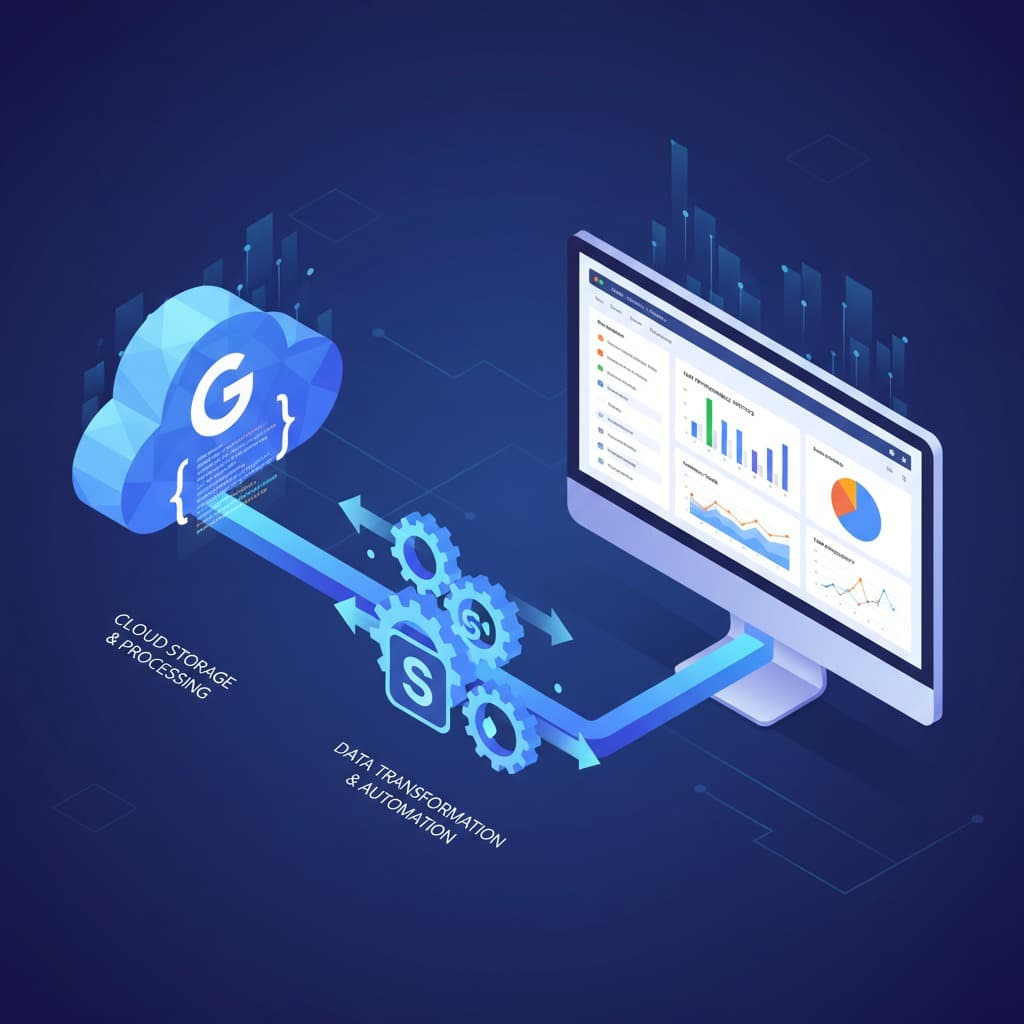
I chose to leverage the Google Workspace ecosystem by utilizing **Google Apps Script**. This created a serverless, lightweight ETL (Extract, Transform, Load) pipeline that lives directly within the environment where the data ultimately resides.
- Eliminates the need for external server maintenance and costs.
- Simplifies authentication via Google's native OAuth2 flow.
- Scales automatically without manual infrastructure management.
Phase 1: Extraction via the GBP API
The first challenge is getting data out of the silo. I constructed authenticated GET requests using the `UrlFetchApp` service. To ensure complete data integrity, I implemented a **do-while loop** that checks for the `nextPageToken`. The raw response arrives as a structured JSON object like this:
{
  "comment": "Great service!",
  "starRating": "FIVE",
  "createTime": "2024-10-02T15:01:23Z",
  "reviewer": {
    "displayName": "Jane Doe"
  }
}
Phase 2: The Logic of Data Normalization
Raw data is rarely good data. In its native format, the review data contains enums and ISO timestamps that break downstream visualizations. I engineered a transformation layer with two critical logic steps:
- Converting string enums (ONE, TWO, etc.) into integers for mathematical aggregation.
- Stripping generic ISO syntax and converting timestamps to a dd-MMM-yy format.
- Standardizing the 'Zulu' time zone indicator to prevent date parse errors in Looker Studio.
Phase 3: Intelligent Keyword Extraction
To unlock hidden value, I integrated keyword extraction logic that automatically identifies staff performance indicators mentioned by customers.
- Automated matching of employee names within review text.
- Tagging reviews in a dedicated 'Staff' column for easy pivoting.
- Identifying top-performing employees without reading manual comments.
Phase 4: Centralizing and Visualizing
Google Sheets serves as our 'single source of truth'. I configured Looker Studio to refresh every 15 minutes, ensuring negligible latency between feedback and action. The dashboard visualizes:
- Sentiment Trends: Line charts overlaying review volume with average star ratings.
- Staff Leaderboards: Bar charts showing feedback volume per team member.
- Response Rates: Tracking management replies to ensure zero customer neglect.
Impact: Operational Agility
By automating the extraction and normalization process, we remove the cognitive load from the operations team. They no longer spend hours scrubbing CSV files; they spend their time coaching staff and engaging with customers. This project demonstrates that raw noise can be turned into a clear, actionable signal with the right API architecture.